Turkish Vowel Harmony Made Simple (Finally)
The one rule that unlocks Turkish grammar. Learn it once and suffixes stop being scary forever.
If Turkish grammar has one master key, it is vowel harmony. It sounds intimidating but is really just a rule about which vowel a suffix uses so words stay easy to say. Learn it once and huge parts of the language click — including all the suffixes you will meet.
The two vowel groups
First, split the eight Turkish vowels (from the alphabet) into two groups:
| Group | Vowels |
|---|---|
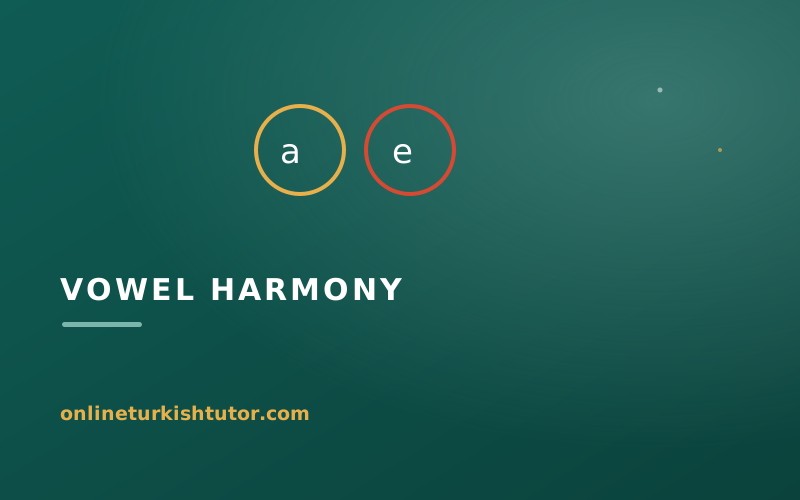
| Back | a, ı, o, u |
| Front | e, i, ö, ü |
The rule: a suffix harmonises to match the last vowel of the word. Back word → back suffix. Front word → front suffix.
Ready to meet your Turkish tutor?
Two-way harmony: the plural
The plural is -lar / -ler:
- kitap → kitaplar (last vowel "a" = back)
- ev → evler (last vowel "e" = front)
Four-way harmony
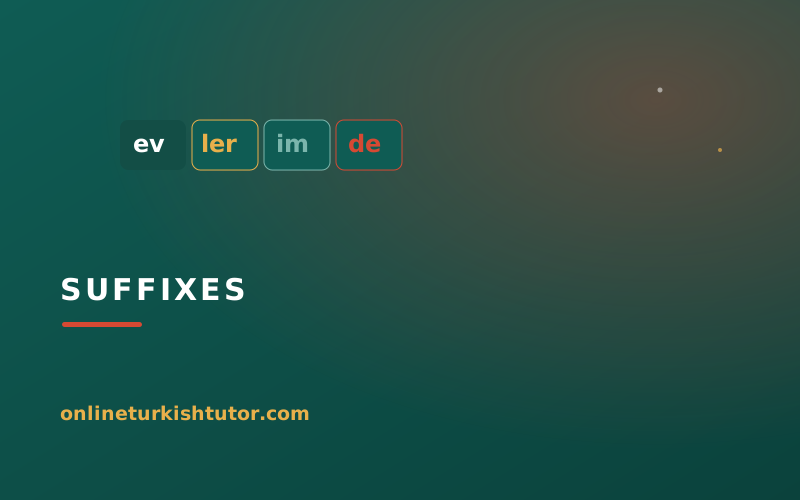
Some suffixes have four forms — -ı, -i, -u, -ü — matching front/back and rounded/unrounded, as in "my":
- ev → evim (my house)
- okul → okulum (my school)
- göz → gözüm (my eye)
- kız → kızım (my daughter)
It looks like four rules but becomes one instinct fast — especially with practice out loud.
Why it changes everything
Once harmony is automatic, plurals, cases, tenses and possessives all follow the same music. This is the pivot point of Turkish grammar. A tutor drilling it with you for a lesson or two turns a rule into an instinct — the moment Turkish starts feeling easy.