The Turkish Alphabet: Every Sound, Clearly Explained
All 29 letters, the six that trip up English speakers, and how to pronounce them — the foundation of reading Turkish.
The Turkish alphabet is one of the friendliest in the world for learners, because it is phonetic: each letter makes exactly one sound. Master it and you can read anything correctly — the perfect first step, as recommended in our beginner's guide.
29 letters, one sound each
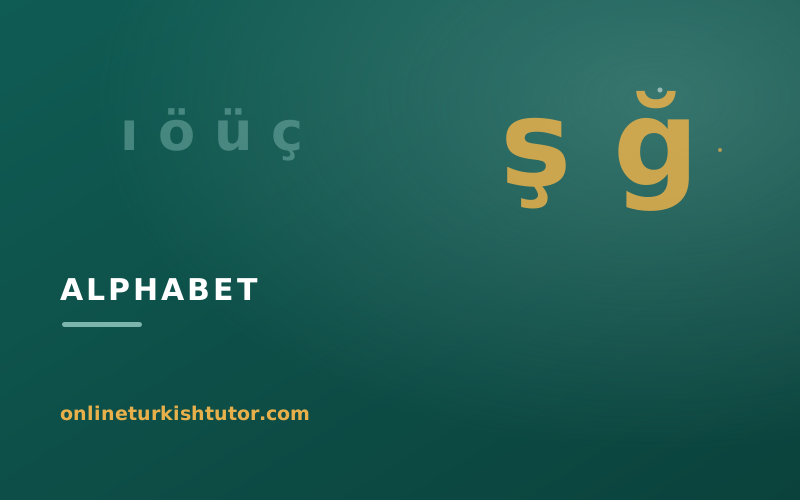
Turkish uses a Latin-based alphabet of 29 letters. It has no q, w, x, and adds letters English lacks. No silent letters, no surprises.
The six letters to learn first
| Letter | Sound | Think of |
|---|---|---|
| ı | uh | the "a" in "about" |
| ö | ur | "bird" (rounded) |
| ü | ew | French "tu" |
| ş | sh | "ship" |
| ç | ch | "church" |
| ğ | (silent) | lengthens the vowel before it |
The dotted i and dotless ı are different letters — a distinction that matters, and one that connects directly to vowel harmony.
Ready to meet your Turkish tutor?
Familiar letters, new sounds
A few letters surprise English speakers: c sounds like "j" (cam = "jahm"), and e is always a short "eh". These quick wins make reading instantly easier.
Practice that works
Because Turkish is phonetic, reading aloud is pronunciation practice. Read simple words daily and record yourself. The one thing self-study cannot give is feedback — a tutor catching the vowel that is slightly off before it sets. From here, move on to grammar basics and your first phrases.